One work record. Two invoice directions.
Telometris manages both sides of project billing. Contractors can submit invoices to the company. The company can create invoices for clients. Both workflows remain connected to the work that produced them, but their rates, statuses, approvals, and financial direction remain separate. Contractor → Company → Client: the same approved work may contribute to both systems without becoming the same invoice.
What the company owes
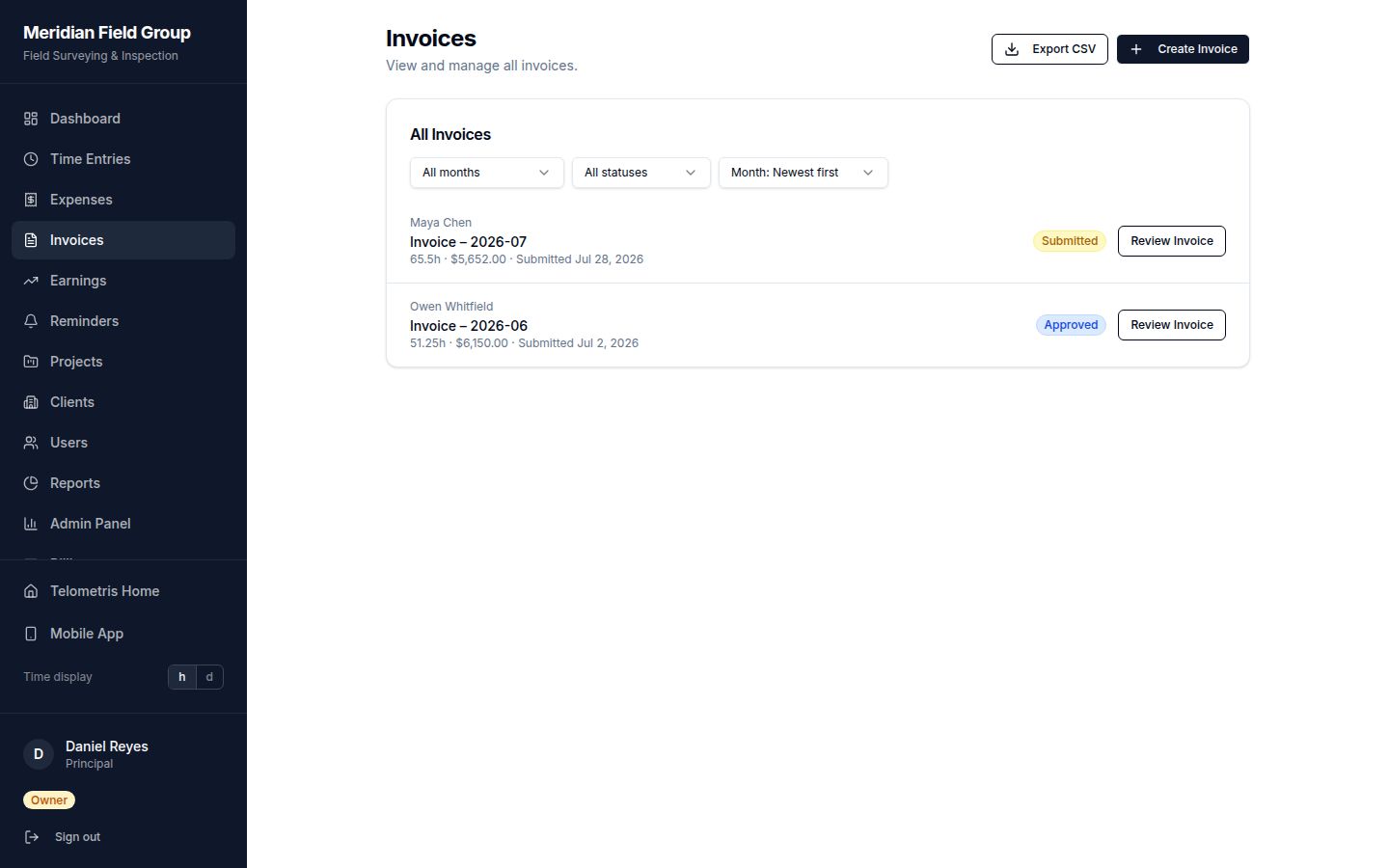
Contractor invoices draw from eligible approved time, reimbursable expenses, and configured travel compensation. Contractors preview and submit invoices; authorized company users review, request revisions, approve, and mark them paid.
A contractor invoice is a company cost.
What the client owes
Client invoices can draw from approved time, project-assignment billable rates, billable expenses, and fixed-fee obligations. Companies preview, create, review, approve, download or send invoices, then record payments.
A client invoice is company revenue or a receivable.
Two rates, two meanings
Contractor billing rates and client billing rates are not interchangeable. Contractor invoicing measures an obligation to the worker. Client invoicing measures an obligation from the client. Telometris connects both to the same operational work while preserving their distinct financial meaning.
From approved work to a submitted bill
Each worker creates their own invoice for the month: Telometris gathers their time entries, expenses, and travel for the period, applies their rate, and assembles the document. Administrators then review, approve, and mark it paid — a clean handshake between the person who did the work and the business that pays for it.
Every worker's rate is applied automatically, so a mixed crew of employees and contractors bills correctly without anyone cross-referencing a rate sheet. Salaried staff invoice too — their time isn't billed, but their expenses and travel flow through the same submission and approval path.
Standardized, exportable, auditable
Invoices follow one clean, professional layout with a downloadable PDF. Clients and bookkeepers see consistent documents; your team stops adjusting margins in a word processor. Past invoices remain in the record, tied to the hours and expenses that produced them.
Invoice history, time entries, and expenses export as CSV at any time. Your billing history is your data.
Invoices are downstream financial records
An invoice is created from eligible work, expenses, travel compensation, or billing obligations. It does not replace the source records.
Contractor invoices use eligible records to describe what the company owes a worker. Client invoices use eligible records and obligations to describe what a client owes the company.
The two invoice directions remain connected to the same operational history while preserving different rates, statuses, approvals, and financial meanings.
Operational record → Contractor invoice / Client invoice
Common inquiries
Who creates the invoice — the worker or the office?
The worker creates their own monthly invoice from their recorded time and expenses; administrators review, approve, and mark it paid. Corrections are made to the underlying records, keeping the invoice and the work history consistent.
Do salaried employees use invoices too?
Yes. A salaried employee's time isn't billed, but their expenses and travel are submitted, approved, and reimbursed through the same monthly invoice flow.
Does Telometris support different billing rates per person?
Yes. Each worker carries their own rate, applied automatically when invoices are generated — no manual rate lookups.
Can I export invoices and their backing data?
Yes. Invoices, time entries, and expenses export as CSV at any time, with no request or waiting period.
Begin recording.
14 days free, then from $5–$8 per user per month. Every feature included.
Start Free Trial